Creating a home office that balances relaxation and productivity can transform your work-from-home experience. Whether you’re setting up a dedicated room or a small corner, the right environment helps maintain focus, reduces stress, and enhances efficiency. Below are practical tips to help you create a workspace where you feel both calm and motivated.
Choose the Right Location
Selecting the ideal spot for your home office is the first step. Ideally, look for a space that is quiet and away from high-traffic areas in your home. Natural light is also a vital factor; windows not only provide illumination but also a connection to the outdoors, which can improve mood and energy levels.
If space is limited, consider using room dividers or screens to delineate your office area from the rest of the living space. Avoid working from a bed or couch, as these spots tend to associate with relaxation rather than focus.
Invest in Comfortable and Ergonomic Furniture
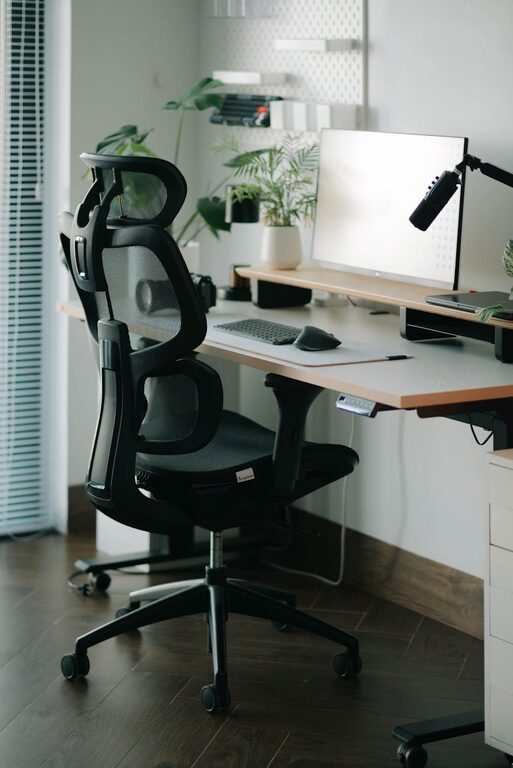
Comfort plays a major role in maintaining productivity. An ergonomic office chair supports your posture, reducing aches and improving focus during long work sessions. Pair it with a desk at the right height, ideally allowing your forearms to rest parallel to the floor when typing.
If space permits, consider a sit-stand desk to vary your posture throughout the day. Adding supportive accessories like a footrest or keyboard tray can also help improve your comfort and efficiency.
Organise Your Space for Minimal Distraction
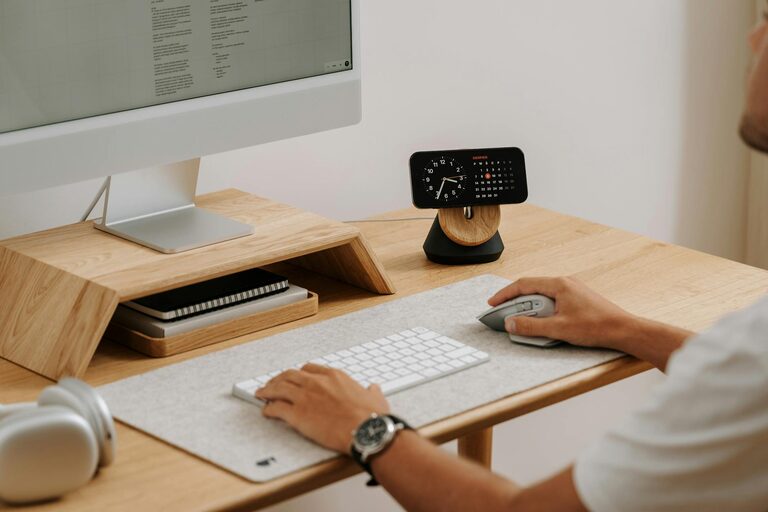
Clutter can be a major distraction, so keep your workspace tidy and organised. Use storage solutions such as shelves, filing cabinets, or desk organisers to keep essential items within reach but out of sight when not needed.
A clean and clutter-free desk helps your mind focus better and promotes a sense of calm. Establish a habit of clearing your desk at the end of each workday to prepare for a fresh start tomorrow.
Pay Attention to Lighting
Good lighting reduces eye strain and keeps you alert. Aim for a combination of natural and artificial lighting. Position your desk near a window if possible, but avoid glare directly on your screen.
Supplement daylight with adjustable LED desk lamps that offer warm or cool light options, depending on the time of day and your preference. Avoid harsh fluorescent lights, which can cause fatigue.
Personalise Your Workspace Thoughtfully
Adding personal touches to your workspace can make it more inviting and motivating, but keep it balanced. Photos, plants, or artwork can boost your mood without overwhelming your focus.
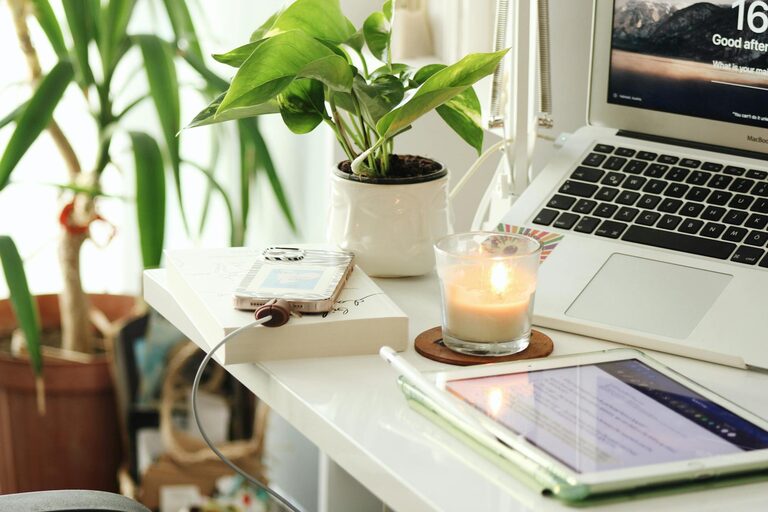
Indoor plants are especially beneficial as they improve air quality and create a calming atmosphere. Choose easy-to-care-for varieties like spider plants or succulents.
Control Noise Levels
Noise can be disruptive or, for some, a motivator. Identify which sounds help you concentrate and which distract you. If household noises are an issue, noise-cancelling headphones or soft background music might be good options.
White noise machines or apps can also provide a soothing soundscape, creating an auditory barrier to distractions and making it easier to focus.
Establish Boundaries and Routine
From a psychological standpoint, setting clear work hours and boundaries supports productivity and relaxation. Communicate your working times with family or housemates to minimise interruptions.
Create a morning routine to transition into work mode. This could include a short walk, a cup of tea, or organising your tasks for the day. Similarly, a closing routine helps signal the end of work, encouraging you to switch off and unwind.
Maximise Technology and Connectivity
Ensure your internet connection is reliable to avoid unnecessary disruptions. Invest in tools that enhance your workflow, such as a quality webcam, microphone, or dual monitors if appropriate.
Organise cables and chargers to avoid a tangled mess that can add stress. Cable management clips or ties help keep everything neat and safe.
Incorporate Breaks and Movement
Remember to take regular breaks away from your desk. Stretch, walk around, or do simple exercises to refresh your body and mind. This helps prevent burnout and keeps your energy levels steady.
Set reminders or use apps to prompt you to stand or move after set periods. Even a minute or two of stretching can improve circulation and relieve tension.
Consider Temperature and Air Quality
A comfortable temperature inside your home office is crucial for concentration. Use fans, heaters, or open windows to maintain an ideal climate.
Good air quality also impacts your focus. If possible, open windows regularly or use an air purifier to reduce dust and allergens.
—
Creating a home office environment that fosters both relaxation and productivity takes some thought and effort, but the positive impact on your work-life balance is well worth it. By arranging your space mindfully, investing in comfort, and prioritising organisation and routines, you can enjoy a workspace that supports your best work every day.